

Many coaches struggle to put together good football practices for their youth teams. The squad is often a mix of ambitions — some kids are there to have fun, for others football is the most important thing in life. To make a good session for this age you need to build it with one clear focus: it should be fun and develop the players at the same time.
What makes a U10 practice both fun and developing
Don't spend time on tactical detail. Practice should flow — no unnecessary breaks, no waiting times, no stoppages. Use the time so players get as much practice as possible, as many touches as they can, lots of decisions to make, and most importantly — have fun.
To achieve this you need enough coaches per player. If you have a big group, split it into smaller groups during practice. A group size around 10 players is a good benchmark. Two coaches per group is the luxury option — one leads the group, the other helps.
Use a theme for the practice so the players know what they are training. Is it attacking play? Defending? A rule of thumb: if someone asks a player after practice what they trained on, they should be able to answer. Then only give instructions related to the theme. If you train how to beat 1v1 in attack, don't go into how to defend 1v1. That can wait for next practice or the week after. Stick to a few instructions per session, 2–4 in total. If the players can learn that, you've achieved a lot — plus they should obviously have fun.
The 90-minute U10 practice structure
A 90-minute U10 practice breaks down roughly like this:
| Time | What | Focus |
|---|---|---|
| 0–15 min | Warm-up with ball | Get the body moving, lots of touches |
| 15–40 min | Drill 1 (intro to theme) | Teaching the 2–4 cues |
| 40–65 min | Drill 2 (game-like) | Applying the theme under pressure |
| 65–85 min | Closer (small-sided game) | Cohesion and joy |
| 85–90 min | Chat and feedback | What did we learn? |
The drills we show below follow this order — pedagogical at the start, progressively more game-like.
How to pick a theme and the drills
Let's say you pick defending as the theme — more specifically Press and Cover. Then you decide what you want to teach in that specific practice. For example:
- The player closest to the ball is the first to press.
- Nearby teammates cover important spaces.
- You have to get into the press as quickly as possible — full speed.
That gives you three clear teaching points for the practice. Stick to those. If the players learn this well, you've achieved a lot. Run this practice a few times across different sessions, and when you notice the players have these three things down — just swap them for other points that matter in pressing. Things like the right pressing distance, which way you want to steer the press, or footwork and body position when pressing.
The drills you should use are ones where the players can learn the things in the theme — the 2–4 cues you want to teach in that practice. No kid likes standing around repeating things without purpose. So use drills that are fun and look like game situations. Add a competitive element, and if they execute the 2–4 cues well, they should have a higher chance of winning. Below are 4 drills you can use to train the Press and Cover theme:
The practice is set up so the first drill introduces the cues in a simple way. The second is more game-like, and the two closing drills are even more game-like. All four are built so the theme can be trained throughout — it's Press and Cover that gets trained from start to finish.
Drill 1: 2v2 with transition (introduction drill)
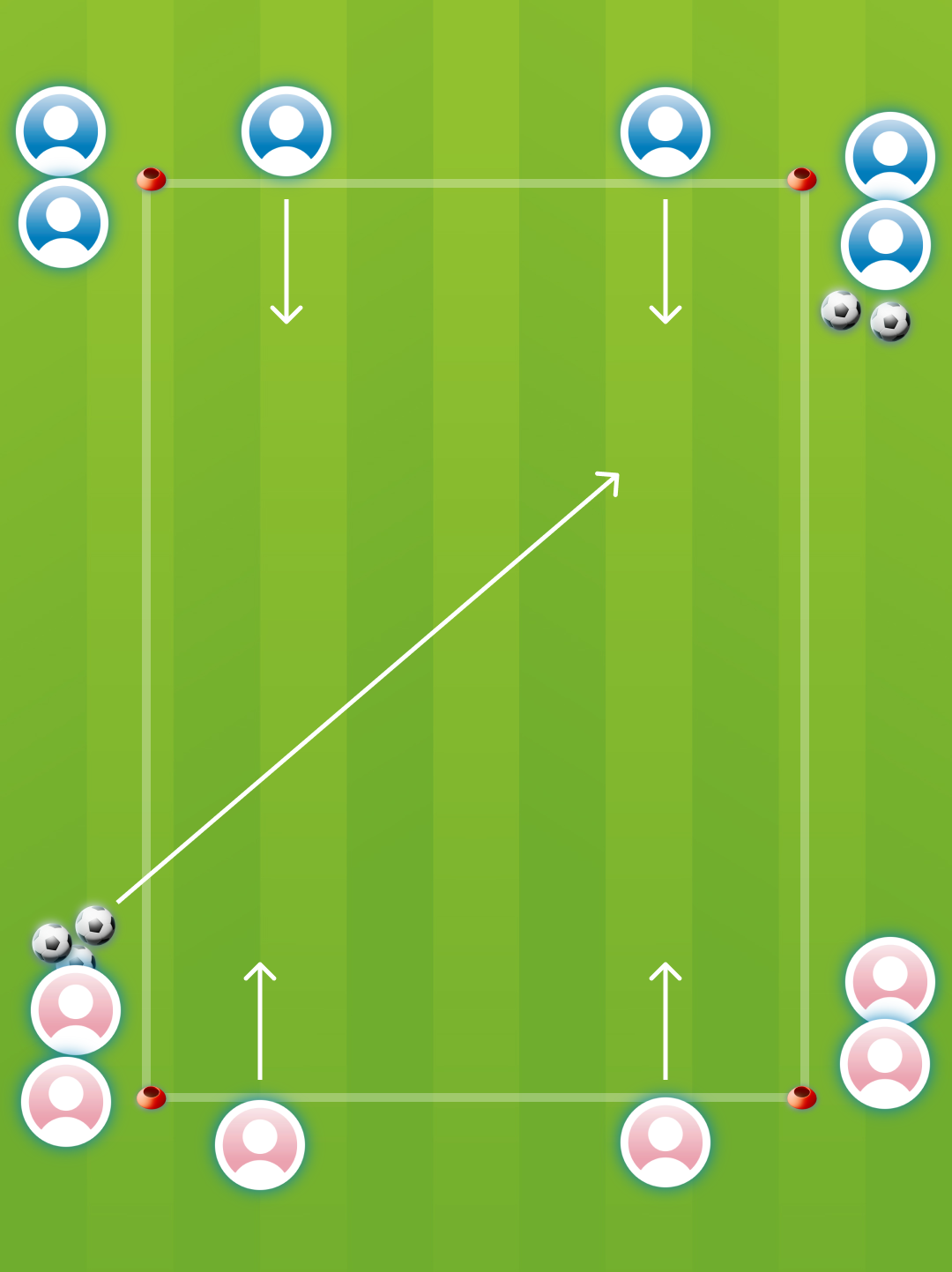
Setup: Split into two teams. 2 players from each team start on the pitch at their respective baselines. The other players wait off the pitch. The game starts with one of the resting players passing the ball in to the opponents. They then play 2v2, trying to score by dribbling past the opponents' baseline under control.
If the defenders win the ball, they get a chance to counter and try to dribble past the other baseline. The players who lost the ball immediately become defenders trying to stop them.
Once the players understand the drill, go through the teaching points:
- The player closest to the ball is the first to press the ball-carrier.
- The player pressing must do it at full speed.
- The other player covers the important space.
Competitive element: The drill is split into two teams, so this works well: play 3-minute rounds and count goals scored. Most goals wins the round. Repeat until practice time is up. The team with the most round wins takes the title.
Drill 4: Murderball (closing drill)
Finish with a fun drill where the group bonds and players leave smiling. Our pick is Murderball — a game-style drill where the coach can drive up the tempo to get full speed in play. The coach also decides which team gets the ball, so you can keep matches even and exciting to decide the practice's winner.
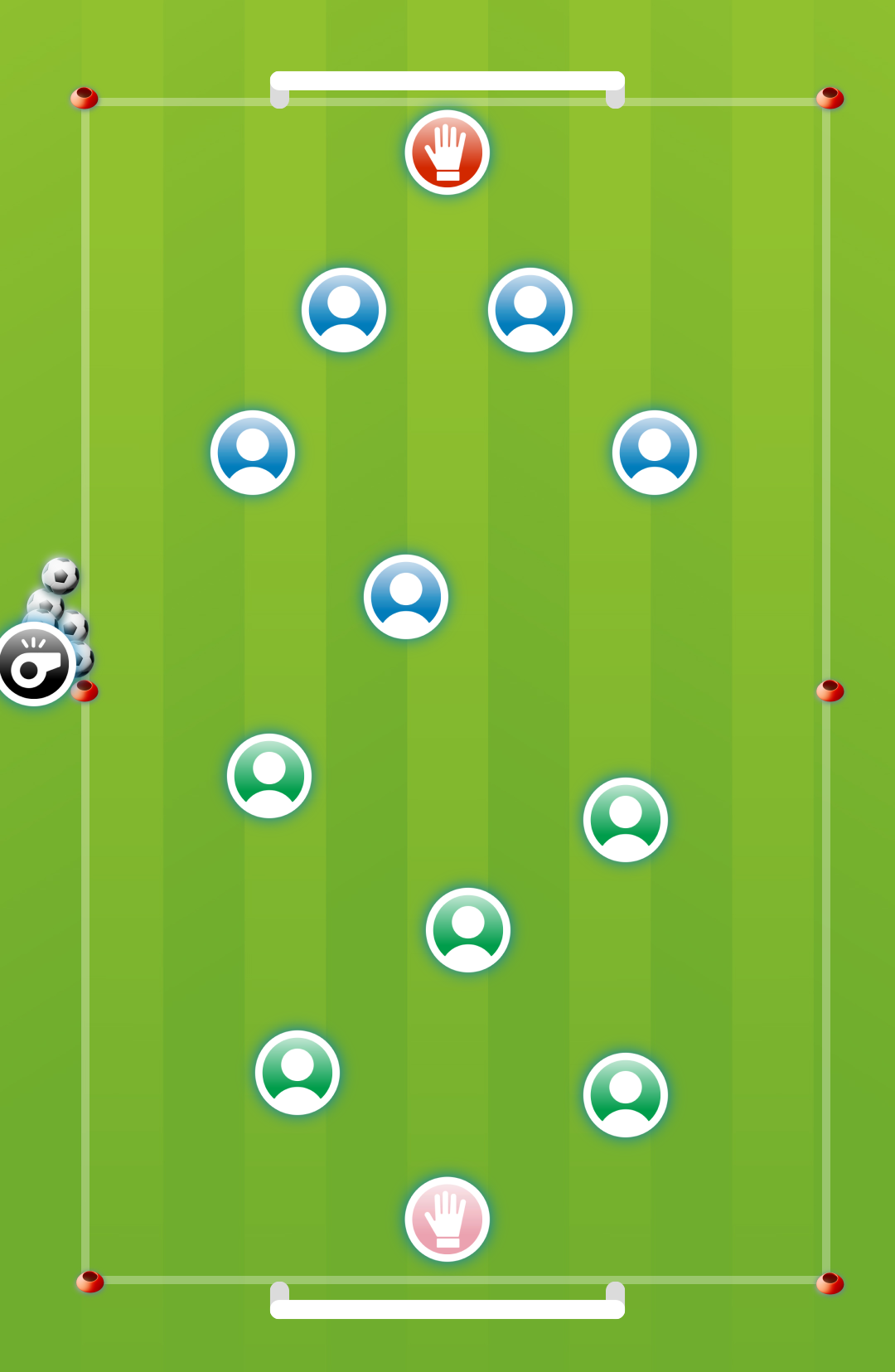
How to play Murderball: Set up a pitch for game-play with goals and goalkeepers. Normal game with one twist: every time the ball goes out over a line, the coach throws a new ball in immediately. As quickly as possible, to either team. The idea is to drive up the tempo in play. Play until the balls run out, collect them again, start over.
Wrap up with a short chat with the players — recap what you trained on. Encourage the players to give feedback.
Get out there and try the setup!